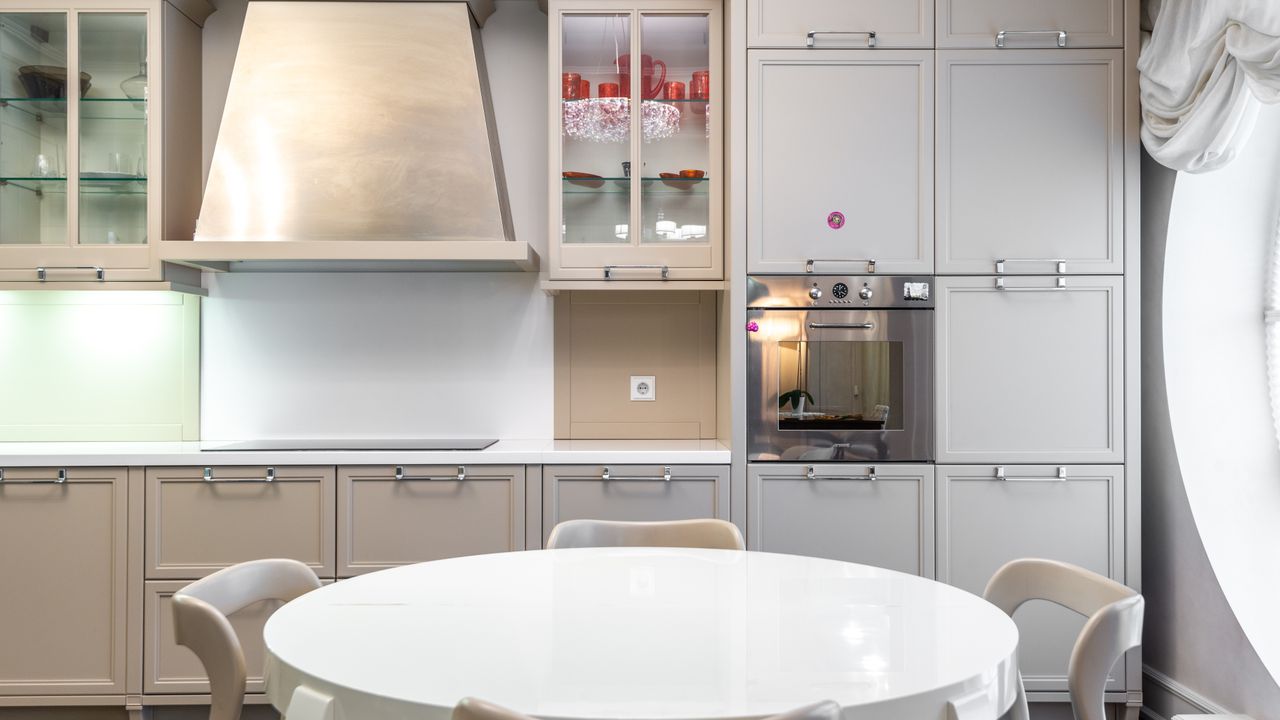
When evaluating kitchen cabinets, most buyers focus on the visible elements — door style, finish color, wood species. The hardware that makes those doors open and drawers slide tends to get less attention, usually warranting a brief mention of “soft-close hinges included” in the sales materials. This is a mistake, particularly for buyers who plan to stay in a kitchen for more than a few years. The hinges and drawer slides are the mechanical components that absorb the most repeated stress in a kitchen, and they’re also the components most likely to be downgraded quietly when manufacturers face cost pressure.
How cabinet hardware supply chains actually work
Most cabinet manufacturers don’t make their own hinges and drawer slides. They source them from hardware suppliers, and the choice of supplier — and the specific product grade within that supplier’s catalog — varies considerably across price points.
At the top of the market, manufacturers specify hardware from companies like Blum, Hettich, and Grass by specific product series, often the same series used in European kitchen systems where furniture quality standards are enforced more rigorously than in North American markets. These companies publish full technical specifications, including cycle life testing data, load ratings, and tolerances, which allows a manufacturer to make specific performance commitments backed by documented testing.
In the mid-market, hardware sourcing becomes less transparent. A manufacturer may list “soft-close hinges” as a feature without specifying the brand or grade. The hinge may be a Blum Clip-top, or it may be a commodity import that uses a similar mechanism but with looser manufacturing tolerances and lower-grade materials in the pivot mechanism. Both are technically “soft-close hinges.” The difference in how they perform after several years of daily use is substantial.
At lower price points, hardware sourcing often involves the lowest available commodity option that passes a basic function test at the factory. These hinges and slides work when new. The question is how they work after 50,000 cycles.
What cycle life testing actually shows
Blum publishes a 200,000-cycle test standard for their Clip-top hinge series. That number represents the number of full open-and-close cycles the hinge is tested to without exceeding specified wear parameters. For a kitchen cabinet opened and closed five times per day, 200,000 cycles corresponds to roughly 110 years of use. The hinge will outlast the kitchen.
Commodity hinges from less documented sources are typically not independently cycle-tested to this standard. Some manufacturers run their own internal tests; many don’t. The cycle life of a commodity hinge in actual use is difficult to know in advance of purchase because the information doesn’t exist in a usable form.
This gap becomes visible in practice around years three to seven of kitchen use. A hinge that starts to develop play — where the door doesn’t return to exactly the same position on every close — is showing wear in the pivot mechanism. As wear increases, the door begins to sag visibly, and eventually the hinge either fails to hold adjustment or breaks. This is when buyers discover whether their manufacturer’s replacement policy is functional.
Drawer slides and load ratings
Drawer slides have a more directly measurable specification than hinges: load rating, expressed in pounds or kilograms per pair. A 75 lb (34 kg) pair rating means the slide mechanism is designed to support and move a drawer containing up to 75 lbs of contents, repeatedly, without premature wear.
Kitchen drawers carrying pots and pans, heavy appliances, or stacked dishware can easily approach or exceed this rating if the drawers are sized for that use. A lower-cost slide with a nominal 50 lb rating in a deep pot drawer that regularly carries 60 lbs of cookware is being operated above its specification. The slides don’t fail immediately; they wear faster than their ratings predict, and the smooth, consistent travel that was present when the kitchen was new becomes rough and sticky within a few years.
The other specification that matters is extension: how far the drawer pulls out relative to its total depth. Full-extension slides allow the drawer to pull completely out, making the rear contents accessible. Three-quarter extension slides don’t. The difference matters most in deep base cabinets where rear storage is valuable.
The replacement parts question
One practical test of a cabinet manufacturer’s hardware quality commitment is whether they can supply replacement parts for the hardware they install, and whether those parts are available at a reasonable cost and lead time. This question rarely comes up during the sales process, but it’s worth asking.
A manufacturer who specifies Blum hardware can answer this question easily: Blum replacement parts are stocked by thousands of dealers and distributors globally, they’re available within days, and they’re inexpensive relative to the cost of re-hanging a door. A manufacturer who uses house-brand or unspecified commodity hardware may not be able to supply replacement hinges that fit the existing mounting geometry — leaving the buyer with the choice of replacing all the hardware in the kitchen or tolerating mismatched repairs.
The best cabinet manufacturers in this respect are those who specify hardware by brand and model, publish that specification in their product documentation, and have confirmed with their hardware supplier that the parts will remain available for a service period consistent with the expected kitchen lifespan — typically 15 to 25 years.
What to look for during a showroom visit
A showroom visit provides direct evidence about hardware quality that specification sheets don’t capture. Open and close the cabinet doors on display models, paying attention to the feel of the hinge mechanism throughout the arc. A high-quality hinge opens smoothly with consistent resistance, holds the door steady at any angle without drift, and closes with a controlled deceleration that’s the same every time. Play in the hinge at any point in the arc, inconsistent closing speed, or doors that don’t return to the same position consistently are signs of lower-quality hardware.
Pull the drawers on display models fully open and release them. Full-extension slides should pull out cleanly without binding and push closed with consistent, smooth deceleration. Racking — where one side of the drawer leads the other during travel — indicates either a lower-quality slide or one that’s been adjusted out of alignment. In a showroom with relatively new cabinets, alignment problems are more likely to reflect hardware quality than installation issues.
Ask specifically which hinge and slide brand and model is used in the cabinets you’re considering. If the sales staff can’t answer this question, that’s informative. A manufacturer who is proud of their hardware specification can usually answer it immediately.
Why manufacturers substitute hardware
Cabinet manufacturers face continuous cost pressure, and hardware is one of the components where substitution is least visible to buyers. Switching from a Blum Clip-top to a commodity equivalent saves a few dollars per door, multiplied across a kitchen with thirty or forty door hinges. The substituted hardware looks identical in photographs, functions identically when new, and the buyer has no way to identify the change without examining the hardware directly or knowing what to look for.
This substitution happens at the product line level — a manufacturer’s “value” line may use commodity hardware while their premium line specifies brand-name hardware — and it happens over time, as cost pressures lead to spec changes that aren’t communicated to buyers. Asking for the specific hardware specification in writing, as part of the quote or order documentation, creates accountability that verbal assurances don’t.