Considering modern-day industrial systems where precision and efficiency in motion control are required, there has been the development of sophisticated solutions for power transmission. Of these, the Self Tracking Timing Belt has become one of the major innovations in the conveyor system, and this has led to a superior level of alignment, easy movement, and minimum maintenance. They are specially designed to be tracked with regularity and without any external guides or flanges, which is why they will be the most accurate and reliable when it comes to the widest possible use.
Knowledge on Self-Tracking Timing Belts
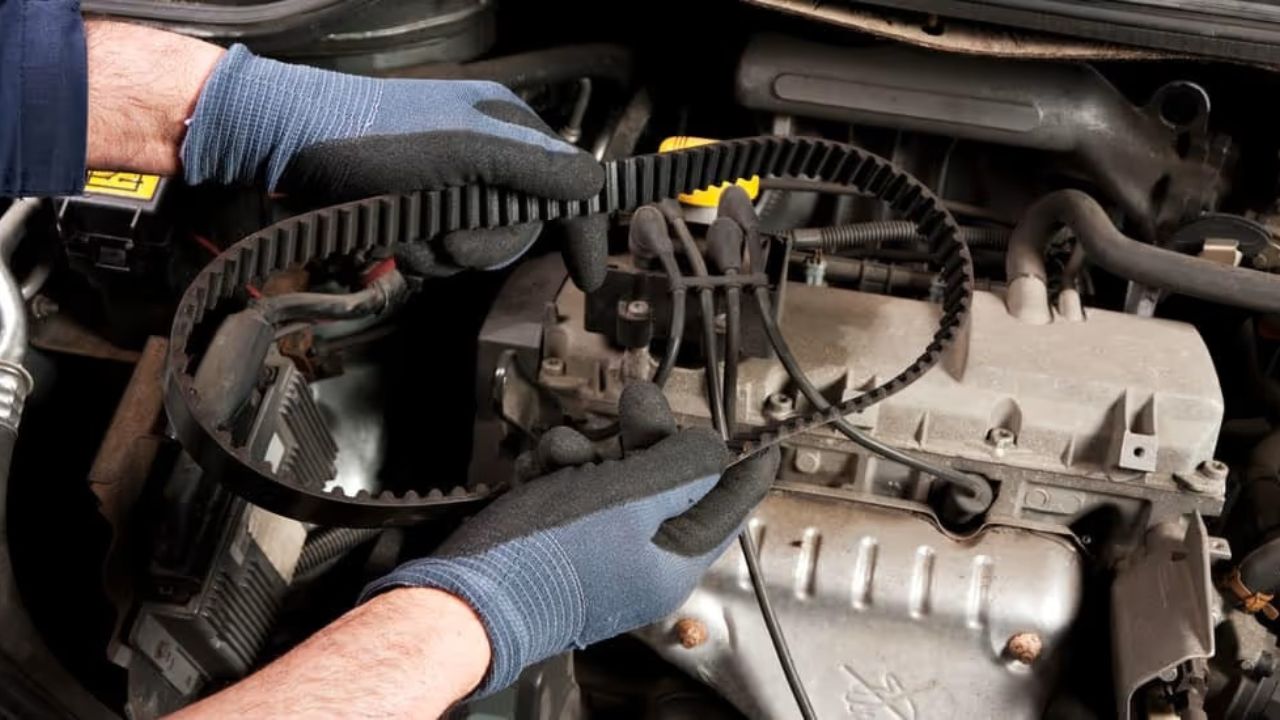
A self-tracking timing belt is a special type of belt that is designed to include a guiding mechanism in its design. A self-tracking belt is contrasted with traditional timing belts that use external flanges or pulleys to position the belt, instead of having a central guide or profile, usually on the inner surface of the belt, that fits accurately into a similar groove on the pulley. This combined guiding design ensures that the belt remains perfectly aligned with the action, even with the changing load or speed conditions.
The main advantage of this design is that it eliminates the problem of misalignment, which is common with conventional belt systems. Self-tracking belts can help increase stability and consistency of conveyor systems in manufacturing, packaging, printing, textile, and food processing accounts by means of proper tracking automatically.
Enhanced Conveyor Accuracy
Accuracy in conveyors is important in industries where a slight error in the positioning of the belt may cause ineffective operations of the industry or even the destruction of the products. Self-tracking timing belts are very effective in enhancing accuracy as they make the belt run straight and true along the pulley system. This exact tracking reduces the lateral movement, and this ensures that items on the conveyor are always in a consistent orientation.
As an example, when using sensors and robotic arms in automated assembly or packaging lines, a misaligned belt may lead to delays or misplacement due to the strict timing requirements. Self-tracking belts keep the components in sync, minimizing the chances of operational mistakes. Their constant tracking also reduces vibration and slippage, which are prime causes of inefficiency in the conventional conveyor systems.
Enhanced Reliability and Less Maintenance
The self-tracking timing belts are characterized by reliability. The design of the guiding system into the structure of the belt helps to wear off the belt and the pulleys less, and increases the life of the whole drive system. The system also has fewer mechanical failures since external tracking devices like flanges or guide rollers are not required, which means that it needs less frequent maintenance.
Moreover, self-tracking belts also minimize downtimes by eliminating the frequent problems of belt wandering or edge wear. The belts are usually composed of strong polyurethane fabrics strengthened with steel or carbon strings that are highly abrasive, oil and chemical-resistant. This strength enables them to work consistently, even when they are subjected to heavy loads or in brutal conditions of operation.
Power Consumption and Business Fluency
The other benefit that can be associated with self-tracking timing belts is that they help in saving energy. Newer belts, which need to be adjusted continuously or when they become misaligned, result in the creation of extra friction, thus causing loss of energy and heat generation. Self-tracking belts, on the other hand, are smooth and have minimal resistance, and hence, power can travel more effectively between the motor and the powered components.
The minimization of the friction as well leads to a decrease in the level of noise, a significant aspect in any industry, which contributes to improved working conditions and maintenance of safety levels. The continuous, controlled movement of self-tracking belts will assist in retaining constant transfer of torque and prevent any slippage of the belt to guarantee optimal and sustained performance.
Industrial Uses Applications
Applications of self-tracking timing belts are common in other industries that demand accuracy and sanitation. They have non-slip and easy-clean surfaces, making their use in food processing and pharmaceutical processing hygienic. They ensure that materials are aligned correctly in the printing and textile industries to enhance the quality of products. They find application in manufacturing plants in robotic systems and automated conveyors in which synchronized and precise movement is critical to the productivity of the manufacturing process.
Conclusion
A significant development in conveyor technology is the use of self-tracking timing belts. They combine automatic alignment features and provide remarkably high accuracy, reliability, and operational efficiency. They are essential in the contemporary industrial environment because of their capability to reduce maintenance, increase life cycle, and provide uniform operation. With the ever-increasing demand for productivity and precision within the industries, the implementation of self-tracking timing belts will be crucial in promoting the general efficiency of conveyor and power transmission systems.